facebook pixel

The Discovery Process: 7 Steps to Creating a Brand Identity

lc_juneblog_2019-2167424

Branding isn’t all logo trends and color palettes. A strong brand identity starts with a true understanding of the business – its stakeholders, audience, industry, values, and more. To strategically end up with branding that represents your company, your branding agency needs to put in the work on the front end – a process we call here at Liquid Creative, discovery.

What Is Discovery?

Without a discovery period, a creative team won’t have the necessary insight to represent your brand. We might not have heard of your business before you became our client, so we take time to get up to speed before any creative work begins.

Liquid Creative has clients ranging from specialized athletic trainers to high-end property management companies. Learn how we gather the insight to create distinct brand identities that are a perfect match for our small business clients!

1. Meet with The Business Owner or Marketing Manager

The discovery process begins right as we’re first approached about taking on a new client. Our Account Management team meets with each new potential client to learn about their target audience, marketing and business objectives, and unique selling points. Once we know a little about your business and marketing goals, we’ll be able to let you know whether our branding services are a good match!

If you feel like your branding is going stale or you’ve outgrown your old logo, it may be time to rebrand your business. Check out these 3 signs it’s time to refresh your branding.

2. Conduct Secondary Market Research

After we’ve determined that a new brand identity aligns with your business and organizational goals, our research begins. We’ll dive deep into your industry, competitors, and target audience. Along the way, we’ll be noting your buying process, unique selling point, and value proposition to know what you bring to customers that no one else can.

3. Team Site Visit

At this stage, we want to see your business in action! Liquid Creative has toured construction sites, production facilities, and pizza parlors to get the best understanding of our clients. We’ll get a feel for your space, team, and daily operations to help keep your brand feeling seamless with how your business is run.

4. Personal Interviews with Stakeholders

After determining who your stakeholders are (customers, investors, employees, and more), we’ll create a list of questions to ask different stakeholder groups. We might request to contact your company leadership, customers, employees, or external partner organizations.

Our conversations with these stakeholders provide insights that can’t be found on a website or by talking to an internal marketer. Through these interviews, we are able to uncover what defines your business, as seen through someone else’s eyes. That’s a core piece of building a distinct new brand identity that aligns with your audience.

5. Discovery Download

Now that we’ve researched your market, seen your operation, and spoken to you and your stakeholders, it’s time to get out some ideas. Our team meets up to brainstorm and discuss what we’ve learned throughout our research.

Our discovery download is all about connecting pieces of our research together to get a full picture of your business. What did you identify as strengths that we didn’t see in your competitors? What do your employees love about their jobs that influences the customer experience? We’ll define what we believe it is your company is offering beyond a product or service. What experience does your business provide?


img_4038-1-8662175
The whiteboard looks a little crazy after a discovery download session!

6. Creative Team, Go!

Now, we’ve determined an organic brand direction that makes strategic sense in your industry and local market. Your branding identity won’t just be a logo – we know just the deliverables you’ll need to maintain a cohesive new brand.

Our branding services include the following:

  • Logo: a mark used to identify your organization or product
  • Color Palette: the various colors and accents to be used in visual communications
  • Typography: lists which fonts to use in various communication scenarios
  • Graphic Collateral: graphic design elements consistently used to complement your logo
  • Word Cloud: a list of words that best represent and differentiate your brand
  • Brand Rationale: a document establishing the tone of written communications

7. Present the New Brand Identity

After a little bit of magic from our creative team, we’ll present you with your new brand identity. Our process starts by presenting 2 logo concepts, often that show two different directions we can take your brand. You’ll choose the one you believe in the most for us to further develop. With final revisions and some finishing touches, your new brand will be ready to launch!

Most of the time, we present two logo concepts, and the client selects one for us to further develop. After the final revisions are made, the new brand is ready to launch!

Rebrand Example

Check out the branding transformation on the 5 Points of Life marathon!


Before

lcs_instagram_sept2018sept21-1-e1560970851786-5302407

Sketch Phase

lc_instagram_5pointssketches-5554652

Final Rebranded Logo

lcs_instagram_sept2018sept21-3-e1560970632479-6980895

Distinct Branding that Embodies Your Organization

A brand shouldn’t be feel mandated—it should feel organic, and complementary to your offerings, employees, and customers. Through the discovery process, our team gathers the background, insight, and inspiration to become the creative force that propels your brand towards new opportunities.

Interested in establishing a distinct new brand for your organization? Learn more about our branding services!



New Year, New Brand: Starting Off 2021 with a Fresh Look

Let me guess, you have a few business goals identified for the year, but you’re wondering if your current brand will cut it. Maybe your goal is to increase brand recognition against competitors. A great goal, but is your brand memorable enough to consumers? It’s a tough question to consider. You don’t have to worry though, we’ve got your back! Our solution: to amplify your company with a refresh of your brand. We’re certain the start of the new year is the perfect time for a rebrand so you can exceed your business goals. Here’s why:

A Fresh Start

What better way to invest in your business than giving it a fresh start for the new year. A brand conveys the overall feel of your business to everyone involved in your company, from potential investors to potential customers. A “look” or logo doesn’t have the power to convey this feeling. Branding is much more involved and comprehensive. With a strategic rebrand, you can celebrate success this new year.

Don’t Miss a Beat

If your business has grown over the last few years, it’s critical to evaluate your messaging. A rebrand helps you reevaluate existing verbiage when entering new markets and convey what makes your business unique today to new customers. Customers love rebrands! It conveys to them that you are a credible company that keeps up with the times and doesn’t miss a beat. I know what you might be thinking, if I say yes to a rebrand, I’m saying goodbye to what my business has always been recognized as. A rebrand doesn’t have to mean saying goodbye to your old brand. Instead, a rebrand simply builds off of your brand’s foundation and grows into a clearer and more consistent brand that aligns with your business as it stands today.

Return on Investment

Why do companies make these huge investments of time and resources to refresh their brand? The answer: A brand differentiates your business from competitors. It establishes a tone for consistent communication. It’s the pumping heart of your business. When you invest in the one thing that makes your business stand out from the crowd, you receive a great return on investment.

The Key Components of Rebranding

Ready to refresh your brand but want to take it slow? The good news is, multiple components go into a rebrand depending on your business’ needs. A partial rebrand might be your first step to achieving your business goals. The key components of rebranding include:

The Values

Values are the beating heart of your business. As you continue to grow as a company, it’s important to renew and establish those rock-solid values that make customers love you.

The Logo

A logo represents your brand, reflects who you are and is the key piece people remember about your company. If you feel like your logo doesn’t fully reflect your business, redesigning your logo can give your business the new look it’s been craving.

The Website

Websites are the best outward-facing marketing channel for businesses. Your website must be up-to-date, easy to find and navigate and be mobile friendly. If you feel your website doesn’t quite represent all your business has to offer clearly and simply, it might be time for a redesign.

Whichever component you choose to rebrand, we know it will be worth it.

Ok, now what?

If you want to meet and exceed your business goals this year, invest in a rebrand. We can help! Liquid Creative is a full-service branding and marketing agency ready to help you create a new brand for your business! We will go through our initial research process (known around here as “discovery”) to understand what differentiates your company from its competitors. From there, we’ll create a brand that conveys that message, and sparks a connection with your desired customers. Learn more about branding with Liquid Creative.

3 Signs It’s Time to Refresh Your Brand

Do You Need to Rebrand?

A brand does so much more for your business than simply provide a “look” or logo. A brand is an important tool that differentiates your company from its competitors and establishes a tone for consistent communications.

Not sure if your brand is strong enough to stand out in the crowd? Here are 3 signs it’s time to consider a rebrand.

1. Your Brand Is Your Logo

A brand provides the overall feel of your business that you would like to convey to everyone involved with your company, from potential investors to potential customers. There is no way to accomplish this with only a logo! A brand identity is composed of several elements, and establishes guidelines for visual and verbal communications.

A brand identity document includes:

  • Logo: a mark used to identify an organization or product
  • Color Palette: the various colors and accents to be used in visual communications
  • Typography: lists which fonts to use in various communication scenarios
  • Graphic Collateral: graphic elements consistently used to complement your logo
  • Word Cloud: a list of words that best represent the buying experience and differentiate the product or service
  • Brand Rationale: a document establishing the tone of written communications

Your brand is bigger than your logo– it’s what differentiates your business from competitors. If you haven’t spent time thinking about and establishing what that is, it’s time for a rebrand!

2. Customers Confuse Your Logo, Signage, or Ads With Competitors

If your logo is easily confused with others in your industry, you’re never going to be able to stand out for the great work that you’re doing! While a logo can often indicate the types of goods and services offered, it should also have artistic elements that add personality to the brand and distinguish it from competitors.

lej-9607194
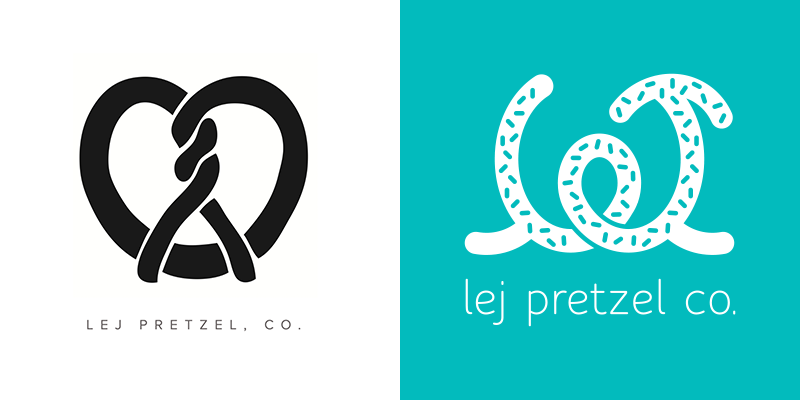
Here you can see how we refreshed the logo for LEJ Pretzel Company. We gave the mark more character and distinctive elements while maintaining the clear purpose that it conveys.


There is more to representing your brand in an advertisement than simply using your logo. The color, style, and types of imagery used to advertise for your business should be consistent and easily recognizable, allowing for quick processing by those who are familiar with your brand.

The messaging you use to talk about your products or services should also be consistent– remember that every post that your business makes on social media reflects your brand. Make sure that you’re building a brand that your customers can relate to, and that adds value to your business. Consider creating a word cloud of adjectives and some nouns that you feel like capture the essence of your brand, and then consistently use these in your content. Try this free world cloud generator to get started.

3. Your Business Has Grown

Maybe you didn’t need a brand identity when you were working out of your home office, but now that your business has grown, there’s a lot more to think about. How will you help your employees convey what makes your business unique to new customers? If you’ve added new products or services since your founding, it’s almost certainly time for a rebrand– reevaluating existing verbiage is critical when entering new markets.


Ready to Rebrand?

The team at Liquid Creative is ready to help you create a new brand for your business! We will go through our initial research process (known around here as “discovery”) to understand what differentiates your company from its competitors. From there, we’ll create a brand that conveys that message, and sparks a connection with your desired customers.

Start standing out with eye-catching graphics and compelling copy– learn more about branding with Liquid Creative.

How to Maximize Your Marketing Budget

blog1-300x157-3490845Regardless the size of your company, budgeting for business owners is a must. For many entrepreneurs, marketing can fall by the wayside due to misunderstood priorities.Here are some ways you can make sure you get the most for your money by creating a reasonable marketing budget, and a plan for its allocation.


Determine your budget

You’d be surprised by how many people create campaigns without setting a budget first. You should have a clear number for how much you are willing to spend on marketing. Don’t know where to start? A good rule of thumb is to allocate about 3-5% of your total yearly gross revenue to marketing your business. Don’t be nervous to raise or lower this percentage based on how much growth you’d like to see.


Plan, Plan, Plan!

So you’ve set aside the funds to start marketing campaigns, now what? Well, you can’t carry out every marketing idea you have. Determine your target audience and the best strategy to reach them. Which social media platforms do they frequent? Would direct mail or email campaigns be most effective? After you’ve decided on a general strategy, assign different and specific marketing projects for each month, week, or day (depending on the frequency you choose for your campaign). The more detailed, the better. You want your marketing calendar (or spreadsheet) to include as much information about each marketing project as possible. This will help you stay organized and avoid doubling up on efforts (i.e., running similar campaigns in a month).


Free marketing?

More like “free” since your time and energy are valuable, but creating social media accounts won’t do any damage to your bank account. If your company doesn’t have a Facebook page, go create one now! It’s free and opens you up to new audiences who may be interested in your company. Today, online word of mouth is even more important than regular old word of mouth, and many brands compete by attempting to forge a personal relationship with their customers. Social media is a great tool for engaging customers, and it’s important to be online so you know what they’re saying about you. Platforms such as Instagram, Snapchat, and Twitter are becoming increasingly popular among consumers and business owners. You don’t need to be on every platform, which is why it’s important to know your target audience and what social media channels will most effectively reach them.


These are just a few ways you can maximize your marketing budget. If you have any questions regarding budgeting, gaining the attention of your audience, or even how to determine who your audience is, let us help! Call us at (352) 600-5050.

Marketing to Generation Z

Who makes up Generation Z (Gen Z)?

novblog2_1-1024x512-8002970Those born after 1996 make up this new generation of consumers. Most of them were born into a world where technology exists everywhere and in every area of their lives – therefore, technology is a huge driving force in their consumer decisions.

For this group, social media is an important part of their everyday lives. Diversity is also a huge representation of this generation, as they are a very inclusive generation. Let’s explore each characteristic and talk about how marketers and advertisers can best target members of Gen Z.

A Technological World

Gen Z does not know of a world without the Internet, streaming videos, smartphones, and social media. Because of this, they favor small amounts of streaming content when it comes to advertising, and they are mostly consumed on their phones, tablets, or computers through apps like YouTube, Instagram, or Facebook.

Connected through Social Media

Social media apps are the main source for how members of Gen Z consume media daily. For Gen Z, social media is how they stay connected with their friends/family, and influencers. What are influencers? Influencers are those found on apps like Instagram, YouTube, Twitter, and Music.ly. They are the ones who have thousands of followers on these platforms; they are becoming an increasingly important driver of consumption and consumer decision-making for Gen Z.

The Rise of Digital Media Influencers

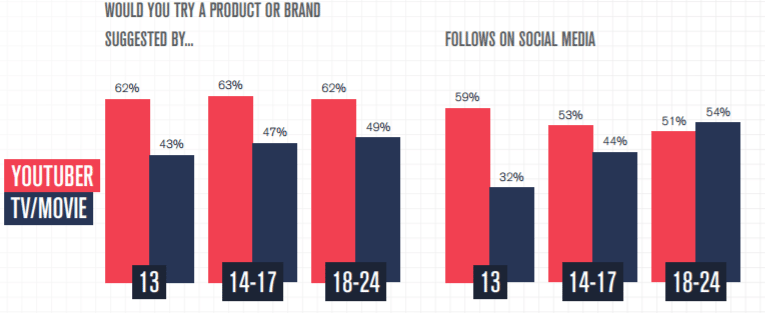
Unlike previous generations who idolized famous TV or movie stars, members of Gen Z fawn over the “digitally famous” – normal teens/young adults who received their fame through Vine, Snapchat, YouTube, Music.ly, or Twitter. Marketers should take notice of the increasing trend of using influencers to endorse their products to their audiences. These influencers have an unusual pull on their followers, Gen Z is influenced easily by them since they can identify and relate to them as opposed to a traditional celebrity. According to Defy Media’s 2016 survey (shown by the graph), Gen Z is more likely to follow on social media and make purchases recommended by their favorite YouTube influencers than traditional celebrities.

movblog2_2-5404964

Rebranding: Out with the Old, In with the New!

Thinking about rebranding your business, but aren’t sure quite where to start? There comes aimage1-3816666 point in the life cycle of every business where things begin to feel a little outdated and it’s time for a refresh. And when it comes to rebranding, there’s more to think about than simply revamping your logo — you need to consider evolving your company’s mission, analyzing the state of your client’s user experience, and adapting your marketing strategy to best fit your current goals. It’s a lot to think about, but don’t worry — that’s where we come in!

Trends & Advancements

Each and everyday changes occur, both in the economy and with technology, that can (and should!) have an impact on your business. It can be tough to keep up with the latest trends and industry advancements on top of handling all the day to day responsibilities of running your business.

If you’re worried that you’re falling behind when it comes to the strategies and tactics you use for promoting your business and attracting new customers, it might be time to bring in marketing experts (that’s us!) to help formulate the perfect tactics for your company and get you back on track.

Update Your Image

If you’re fortunate enough to own a successful business that has seen growth and expansion over the years, then there’s a good chance you may have outgrown your initial branding. When you first started your company, your line of services may not have been as extensive as they are currently. Or, your mission, vision, and priorities may have evolved over time. That’s why it’s essential that your branding and image be kept up-to-date! These elements are among the first things that potential clients see when they are looking into your services — make sure you’re telling the right story about your business!

Strategy is Everything!

Considering and exploring new areas of opportunity and adjusting strategy accordingly is an important phase when rebranding your company. No matter how awesome your branding is, or how impressive your office, website or team culture are — it won’t mean a thing if you’re using the wrong strategy. Are you reaching the right people on the right platforms? Is there is a new audience that you could potentially be targeting or a new product or service that you should be launching to keep up with the competition?

If you’re ready to take your business to the next level, give us a call at (352) 600-5050 to get started!