facebook pixel

March Madness & Marketing: How to Build A Winning Strategy

March Madness & Marketing: How to Build a Winning Strategy

March Madness is one of the most exciting sporting events of the year, bringing together 68 college basketball teams in a high-stakes, single-elimination tournament. Fans eagerly fill out brackets, root for underdogs, and celebrate thrilling moments of competition. But beyond the courts and the games, the tournament provides a masterclass in marketing strategy that businesses can use year-round. From audience engagement to creative storytelling, March Madness is packed with lessons that can help brands build strong, competitive marketing campaigns any time of the year.

Lesson 1: The Power of Storytelling

One of the biggest draws of March Madness is the compelling storylines—the Cinderella teams, the buzzer-beaters, and the dramatic comebacks. People connect with these stories on an emotional level, which keeps them invested.

Businesses can take inspiration from this by crafting strong brand narratives. For example, Nike’s “Find Your Greatness” campaign resonated with audiences because it told the stories of everyday athletes pushing their limits, just as March Madness highlights unexpected champions. Similarly, the Always “Like a Girl” campaign stood out because it told an authentic and powerful story that challenged industry norms.

How to Apply This Lesson:

  • Develop content that highlights your brand’s mission and values.
  • Use real customer experiences as case studies in your marketing.
  • Leverage video storytelling to create emotional connections.
  • Share behind-the-scenes footage of product development or company culture.
  • Create an ongoing content series featuring inspiring stories from your industry.
  • Use social media to engage your audience with personal stories that resonate.
  • Incorporate user-generated content into your marketing to showcase real experiences.

Lesson 2: Engage Your Audience Like a Fanbase

March Madness thrives on audience participation. Fans fill out brackets, debate predictions, and engage in the excitement together. Businesses can harness this kind of engagement by encouraging customers to actively participate in their brand experience.
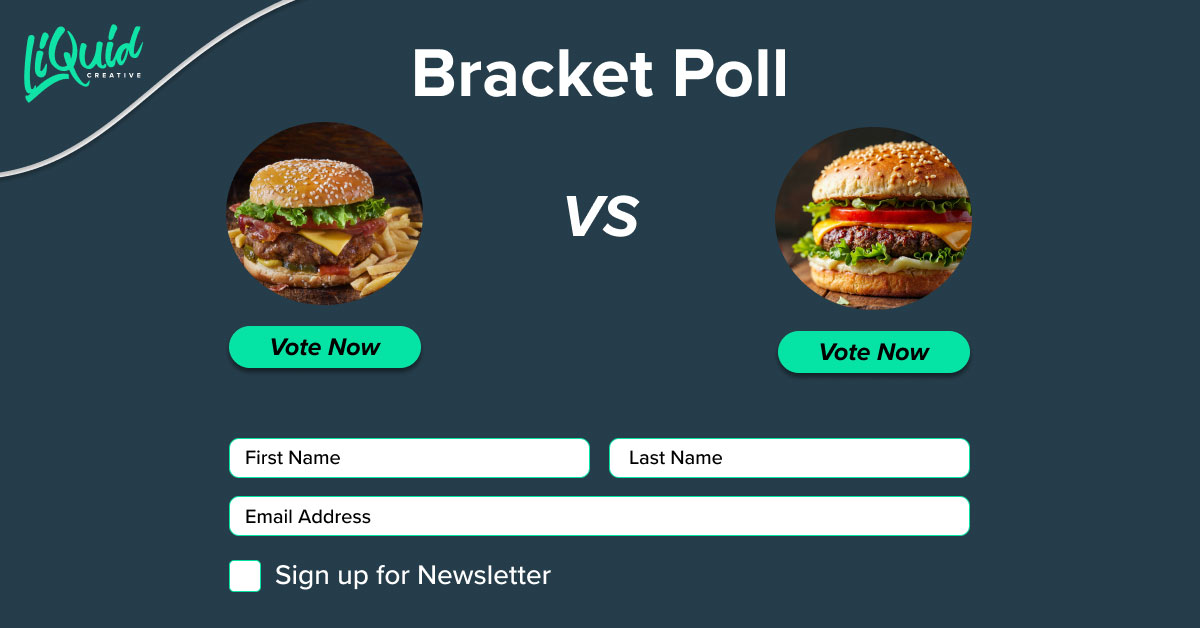
Bracket Poll Form

Interactive content such as polls, contests, user-generated campaigns, and loyalty programs can keep customers engaged, build a sense of community, and turn casual buyers into devoted brand advocates.

Take, for example, Starbucks’ “White Cup Contest,” where customers were invited to doodle designs on their coffee cups and submit them for a chance to be featured as a limited-edition cup design. This kind of interactive marketing makes customers feel like they’re a part of something bigger—just like filling out a March Madness bracket.

How to Apply This Lesson:

  • Create polls or “bracket challenges” where customers vote on products.
  • Encourage social media engagement with interactive posts.
  • Run exclusive loyalty programs that reward participation.
  • Build an online community where customers can interact.
  • Develop a referral program that incentivizes loyal customers to bring in friends.
  • Host live Q&A sessions or social media takeovers to drive engagement.
  • Offer interactive quizzes that help customers find the right product for them.

Lesson 3: Capitalize on FOMO (Fear of Missing Out)

March Madness games are must-watch events. The single-elimination format creates urgency—if you miss a game, you miss history being made. Businesses can apply this strategy by creating limited-time offers, exclusive drops, or flash sales that drive urgency and excitement.
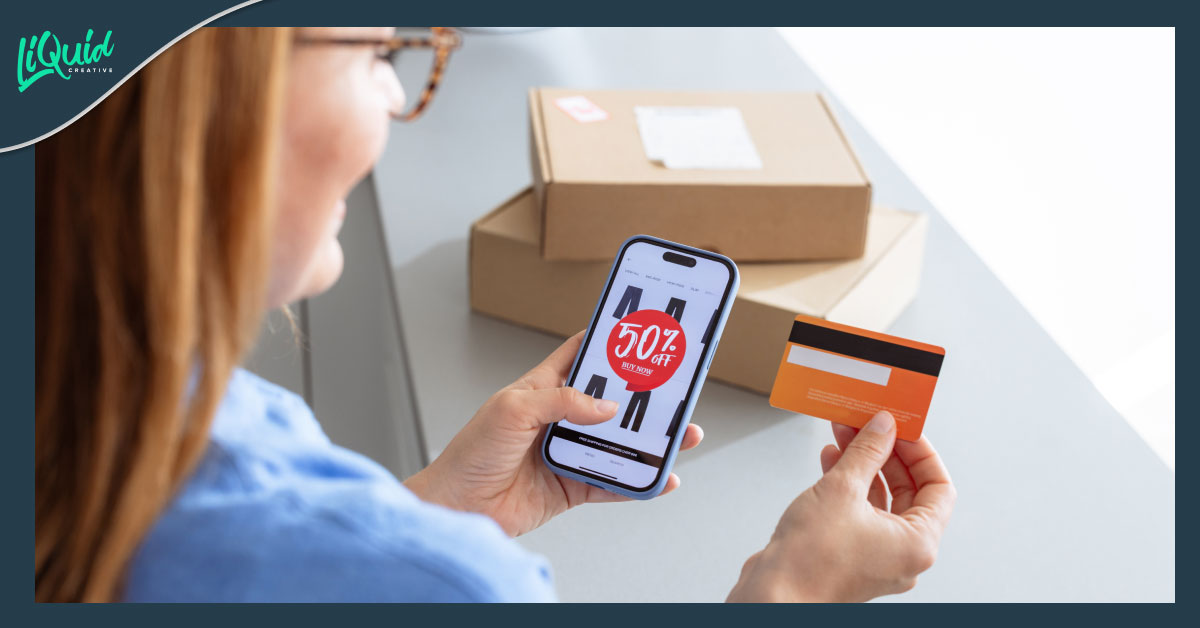
woman holding a phone with shopping deal on the screen holding her credit card

Brands like Amazon have mastered FOMO with events like Prime Day, where shoppers get access to limited-time deals, creating the same urgency and anticipation as March Madness matchups. Similarly, McDonald’s limited-time McRib release generates buzz every year, making customers feel like they have to act fast before it’s gone.

How to Apply This Lesson:

  • Use countdown timers in emails and on landing pages.
  • Offer flash sales or limited-time deals to create urgency.
  • Create exclusive member-only product launches.
  • Use “only a few left in stock” notifications to drive sales.
  • Leverage influencer marketing to build anticipation for new product releases.
  • Send personalized reminders when products are close to selling out.
  • Use SMS marketing for real-time, last-minute deal notifications.

Lesson 4: The Underdog Effect—Root for the Unexpected

Every year, an underdog team captures national attention by defying expectations. People love to rally behind a brand that surprises them or challenges the industry norms.
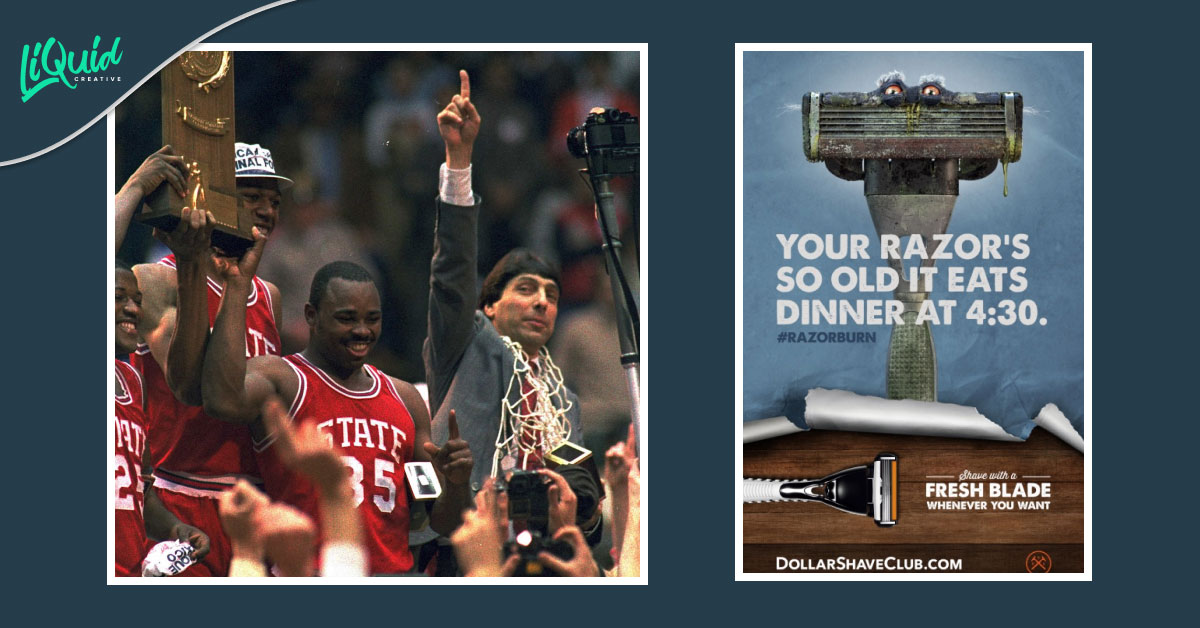
Side-by-side image of Dollar Shave Club ad and an underdog team

One of the best examples of this in marketing is Dollar Shave Club. The company disrupted the shaving industry with a bold, humorous video that went viral, challenging major competitors like Gillette. This underdog approach resonated with consumers and led to massive success.

How to Apply This Lesson:

  • Position your brand as an industry disruptor.
  • Share stories of overcoming challenges and perseverance.
  • Use grassroots marketing to build an authentic community.
  • Partner with influencers or advocates who embody your brand’s spirit.
  • Develop bold, humorous, or unconventional ad campaigns.
  • Engage directly with consumers through social media to create a personal brand identity.
  • Highlight your brand’s unique story and values to differentiate from competitors.

Final Thoughts: Take a Page from March Madness

March Madness isn’t just about basketball; it’s about passion, strategy, and resilience. Businesses that apply these same principles—storytelling, engagement, urgency, and disruption—can create marketing campaigns that stand out in any industry. Whether you’re launching a new product, revamping your brand strategy, or finding new ways to connect with your audience, these lessons provide a winning formula.

Slam Dunk Your Marketing Strategy with Liquid Creative

At Liquid Creative, we understand that great marketing is about more than just pushing a message—it’s about creating an experience. Just like the coaches of the teams in March Madness, we help businesses craft winning strategies that engage, excite, and convert.

Whether you need a bold storytelling approach like Nike, an interactive campaign like Starbucks, or a disruptive strategy like Dollar Shave Club, our team has the expertise to make your brand stand out. We specialize in crafting custom marketing playbooks that leverage the best insights from events like March Madness, ensuring your brand is always a step ahead of the competition.

Want to bring a championship-level strategy to your marketing? Let’s chat! Contact Liquid Creative today and let’s start building your game plan for success.

What Are Users Really Doing on Your Website?

What Are Users Really Doing on Your Website?

You’ve just launched a new website for your business. Now, all that’s left to do is sit back and wait for the leads to come in, right?

Not exactly.

To get the most out of your website, you need to pay attention to how people are using it. Seeing which blogs people are reading, what buttons people are clicking, and even what terms people are searching for will tell you a lot about how you can convert a new customer.

In this blog, we’ll dive into what website analytics you should keep your eye on, what insights they provide about your website, and how to make tweaks to improve your conversion rate.

Must-have Website Analytics

There are many different tools to view your website’s metrics. Although Google Analytics 4 is the most popular one, you can measure analytics with tools ranging from WordPress plugins like MonsterInsights or as part of CRM platforms like HubSpot. With these tools you get an inside look at how visitors interact with your website. While there are a ton of metrics to track, these are the most important ones for understanding how your website is performing.

Sessions

Sessions can be thought of as periods of time when someone browsed your website. From the moment someone lands on your website to the moment they navigate away counts as 1 session, as long as they remain active.

Website sessions are a good metric for understanding how busy your website is. It gives you an understanding of how many times your website is being browsed, not just how many people are visiting. This metric is helpful for understanding how your website is performing in a given time period. Check your website sessions monthly to see if any trends emerge.

Pageviews

Pageviews are the number of times that an individual page was viewed. Anytime someone opens up a page, they add another pageview to your total.

This metric is very helpful for understanding which pages of your website are popular. By seeing which pages are getting the most pageviews, you can understand what information people are looking for, which blog topics perform the best, and which pages might be difficult to find. Use these insights to lean into what works and improve navigation to pages with less views.

Most Visited Pages

The most-visited pages show you what content your audience is most interested in.

This metric can show you which services people are checking out, which of your blogs are creating the most traffic, and what pages people are looking at before they decide to contact you. A high-traffic page presents an opportunity: focus on how to impress your users and encourage action within your most-visited pages.

Session Duration

Session duration indicates how long someone is staying on your website after they arrive.

A shorter session duration could mean that people aren’t finding the content they’re looking for on your website. To improve your website’s session duration, add valuable information and don’t use “clickbait” in your ads or social media. In general, your session duration shows how long you’re keeping your visitor’s attention.

Location

Location shows you the geographic location of your website visitors.

For most businesses, traffic from outside the U.S. should be excluded from analytics results. For local or regional businesses, you may want to see what percentage of your traffic is within your service area. If you’re seeing a high percentage from outside your coverage area, you may need to adjust your marketing or more clearly state your location on your website.

Source

A source refers to where the website traffic came from. This includes if the traffic is direct, organic or paid. If you set up a way to track your campaigns (for example, using UTM codes), you can see which specific campaign brought traffic to your website. This means that you can know if the traffic source was from your social media post, a Google Search Ad, or your YouTube video ad.

This is one of our favorite metrics here at Liquid Creative. If you tie it to the conversion metric (explained in the next paragraph), you can measure which campaign brought your desired conversions and be able to evaluate the performance of each campaign.

✉ Subscribe to our Newsletter
Monthly, easy-to-implement marketing tips to improve your website, social media, digital ads, cyber security, and more.

Conversions Metrics

Some of the most common goals for business websites are leads and sales. When a visitor takes action on your website, it’s considered a conversion. Many service-oriented businesses rely on their website to generate leads, including form fills, email inquiries, and phone calls. E-commerce businesses are more likely to look for online sales.

Unlike the metrics explained before, conversions are metrics that you have to create yourself, based on your goals.

Here are three of the most common and useful conversions:

Form Fills

Form fills refer to submissions to any form on your website. These forms allow users to do things like ask general questions, requesting a quote or a free estimate, ask for a call back, and more.

Most businesses are interested in the quantity of leads they can generate through form fills. However, you should also be aware of the quality. Take note of how visitors are interacting with your form. What fields are they skipping? What common themes do you see? Making your form as fast and easy as possible is likely to increase the number of form fills you’ll receive. Optimize the experience by reducing required fields, adding dropdowns, and being clear about the information you’re requesting.

Phone Clicks

A phone click event activates whenever a user clicks on a phone number on your website. If you coded your website correctly, that click should generate a call. Although this works mostly on mobile, and only if the user clicks on the link (not if they call directly), it’s still an important conversion to evaluate.

Sales

If you are running an eCommerce website, tracking a sale conversion is probably the most important conversion metric of all.

How is your user interacting with your website

So, you designed your website following all the recommended web design trends. Now, which metrics can help you find out how the user interacts with your design? All the metrics we’ve talked about so far may give you valuable information about your user and the actions they take in your website, but they don’t show you how the users interact with each page. Are they liking the design? Are they interacting with it in the way you planned? Are they clicking in places you can’t track with other metrics?

To solve those questions you can use the following tools:

Heatmaps

Heatmaps show how users move and click around on your website.

A heatmap is a great way to evaluate user experience and interest. Pay attention to where people are clicking and where they aren’t. For least-clicked areas, make sure your language is clear and users know what to expect after they click. On the other hand, your most-clicked areas show you new opportunities for expanding your website content.

Session Recordings

Session recordings are actual video recordings of your user interacting with your website. You’ll get a screen video capture of important information like how they scroll, where they move their mouse, in what places they spend more time, and how they go back and forth in between pages.
For privacy reasons, you will not know who the person is or access important information they fill in forms, like phone numbers or credit cards.

Analyze, Strategize, and Optimize

Improving your website is a continuous process. Updating your website, adding content, and improving usability will both improve your SEO and convert more visitors into customers.

Using the metrics above to analyze your website, strategizing ways to improve it, and implementing those changes should be a cyclical process. At Liquid Creative, we develop stunning business websites while always strategizing our next step. We can improve your existing website with intentional updates, improve your SEO with monthly blogs, or even create a personality-filled site from scratch.

Our website team prioritizes strategy and usability to earn you the most calls and clicks. Learn more about how we can help you impress and convert your website visitors: Contact us today!

4 Reasons Why You Should Have a Target Audience

lcs_blog_aug2020-1-1171742

Audience targeting is a key component of an effective advertising campaign. It can be tempting to take a mass approach to your marketing strategy. After all, your product or service is absolutely fantastic and everyone should use it! will help so many people! It just makes sense that you’d want to get yourself in front of as many eyeballs as possible. Unfortunately, this approach can be costly and ineffective. Having a target audience in all areas of your marketing campaign (digital marketing, social media, traditional advertising, and email marketing) ensures that you’re getting your message to the people who are going to benefit the most from your product or service.

Return on Investment

The return on investment, or ROI, is one of the main reasons to develop a target audience and focus your marketing tactics  on that group. Targeting your messaging to a narrow and defined audience means you’re reaching people who are most likely to benefit from your product or service. When you do this, you’re not wasting time and resources delivering your message to people who are unlikely to use your product. If you’re selling bathing suits, it wouldn’t make sense to take out a full-page ad in the newspaper in January. Sure, there may be a few people that may need a bathing suit. But likely you’re not going to make enough sales to justify the cost of the advertising. If you create a Google ad for bathing suits where you are targeting people who recently booked Caribbean cruises, more people will see it who are in the market for a bathing suit. You get a greater return on your advertising dollars when you target  your advertising to people who need your product. 

Build Brand Loyalty

Understanding your target audience allows you to better connect with the people who are benefiting the most from working with your business. When you build high-quality connections between your brand and your audience, it makes people feel valued and want to contribute to the success of your company. Feeling heard, understood, and accepted fosters feelings of loyalty. This means you have a fan base that will become a part of your marketing team. Their engagement on your social media and word-of- mouth referrals will help spread your message. Members of your target audience that are loyal to your brand will share your business with other people that share similar traits and values.


Efficient Sales Process

It takes time, effort, and energy to bring people from a lead to a customer. When you effectively market to a segmented audience, you are putting higher-quality leads into the top of the funnel. You’re targeting people who are most likely to use your product or service work with you, so they’ll require less nurturing to convert to a customer. If you are a commercial landscaping contractor, targeting only businesses in your advertising campaign saves you the time and bandwidth of fielding calls from homeowners seeking residential services. Having a target audience helps ensure that the time you’re spending nurturing leads will result in sales.

Establish Authority

Targeting your audience allows you to become an expert on appealing to the people who are going to get the most from your product or service. You will identify what words, images, and strategies work to get their attention and understand how you can best communicate the value of your product or service to them. This builds trust within your audiences and differentiates you as an industry leader. Targeting your audience allows you to deliver an impactful message that increases your credibility. 

OK, now what? 

Now that you understand why audience targeting works, it’s time to figure out who your target audience is and how to reach them. We can help! Our strategy team works with businesses every day to craft messaging that appeals to their target audience. 

3 Signs It’s Time to Refresh Your Brand

Do You Need to Rebrand?

A brand does so much more for your business than simply provide a “look” or logo. A brand is an important tool that differentiates your company from its competitors and establishes a tone for consistent communications.

Not sure if your brand is strong enough to stand out in the crowd? Here are 3 signs it’s time to consider a rebrand.

1. Your Brand Is Your Logo

A brand provides the overall feel of your business that you would like to convey to everyone involved with your company, from potential investors to potential customers. There is no way to accomplish this with only a logo! A brand identity is composed of several elements, and establishes guidelines for visual and verbal communications.

A brand identity document includes:

  • Logo: a mark used to identify an organization or product
  • Color Palette: the various colors and accents to be used in visual communications
  • Typography: lists which fonts to use in various communication scenarios
  • Graphic Collateral: graphic elements consistently used to complement your logo
  • Word Cloud: a list of words that best represent the buying experience and differentiate the product or service
  • Brand Rationale: a document establishing the tone of written communications

Your brand is bigger than your logo– it’s what differentiates your business from competitors. If you haven’t spent time thinking about and establishing what that is, it’s time for a rebrand!

2. Customers Confuse Your Logo, Signage, or Ads With Competitors

If your logo is easily confused with others in your industry, you’re never going to be able to stand out for the great work that you’re doing! While a logo can often indicate the types of goods and services offered, it should also have artistic elements that add personality to the brand and distinguish it from competitors.

lej-9607194
Here you can see how we refreshed the logo for LEJ Pretzel Company. We gave the mark more character and distinctive elements while maintaining the clear purpose that it conveys.


There is more to representing your brand in an advertisement than simply using your logo. The color, style, and types of imagery used to advertise for your business should be consistent and easily recognizable, allowing for quick processing by those who are familiar with your brand.

The messaging you use to talk about your products or services should also be consistent– remember that every post that your business makes on social media reflects your brand. Make sure that you’re building a brand that your customers can relate to, and that adds value to your business. Consider creating a word cloud of adjectives and some nouns that you feel like capture the essence of your brand, and then consistently use these in your content. Try this free world cloud generator to get started.

3. Your Business Has Grown

Maybe you didn’t need a brand identity when you were working out of your home office, but now that your business has grown, there’s a lot more to think about. How will you help your employees convey what makes your business unique to new customers? If you’ve added new products or services since your founding, it’s almost certainly time for a rebrand– reevaluating existing verbiage is critical when entering new markets.


Ready to Rebrand?

The team at Liquid Creative is ready to help you create a new brand for your business! We will go through our initial research process (known around here as “discovery”) to understand what differentiates your company from its competitors. From there, we’ll create a brand that conveys that message, and sparks a connection with your desired customers.

Start standing out with eye-catching graphics and compelling copy– learn more about branding with Liquid Creative.

Using Team Building to Strengthen Company Culture

What is Company Culture, and Why Does it Matter?

Company culture has become quite the buzz word lately… But what does it really mean? Company culture is what governs non-transactional workplace interactions. For instance, whether your office is collaborative or competitive, a slacks-only environment or sandal-friendly, pen-drop silent or playing the latest hits, is all determined by your company’s culture. It’s the combination of policies and unwritten rules that make a workplace “uptight,” “laidback,” or anything in between.

Company culture has become crucial to attracting top talent and keeping worker’s engaged. Gallup’s 2017 State of the Global Workplace report found that 67% of employees are “not engaged” at work. This recent drag in productivity has caused HR managers to reevaluate how they are motivating individuals, and create new policies aimed at increasing workplace flexibility, autonomy, and camaraderie.

Team Building Tips

We have a small (but talented!) group here at Liquid Creative, so having a close-knit team helps us keep our employees motivated, our open office space productive, and our work its most creative. Here are some team building activities that we use to keep our company culture strong that you can try out with your team!

1. Weekly Culture Hour

Our weekly culture hour is a chance for our team to take a creative break, share some laughs, and enjoy a planned activity together. Here are just a few of our activities that you can adapt for your office.

2. Bring Your Dog to Work Day

People love pets. If no one is allergic, allowing quiet, well-behaved dogs in the office can brighten everyone’s mood!

img_1887-1-e1542737484673-8849107

3. Celebrate Milestones

Acknowledging important professional and life milestones makes your employees feel appreciated. We always celebrate our teams’ yearly work anniversaries, birthdays, and weddings with an in-office gathering. We are lucky to have some wonderful and enthusiastic chefs on our team, so we rarely have to cater!

img_2475-1-5098731

4. Hold a Friendly Competition

Our teammates give each other “snaps” for helping out, and at the end of the quarter the teammate with the most snaps is declared winner! Snaps can be given for serious accomplishments, such as writing an awesome new ad, or for something silly, like bringing in donuts.


5. Try Something New Together

Getting out of your comfort zone together can be an exciting, and bonding, experience! Our team went to the Gainesville Circus Center, where they took their talents to new heights. Check out this article on Gainesville team building activities from The Business Report of North Central Florida for more local ideas!

img_1925-1063093

6. Have A Night On the Town

Out of office gatherings are the best way to get to know the people who are most important to your team, such as significant others or close friends, outside of work. You may think to yourself, “why does that matter?” It does if you want to create the type of culture where your employees know that you care about them as people. From a more bottomline-focused perspective, providing opportunities for your employees to cultivate friendships can reduce labor turnover.

Going to see a play, band, or attending another special event is always a fun time! We recently took our team and their significant others to see The Wolves at the Hippodrome Theatre.

7. Host Your Team

On the same note, hosting your team in your home is a great way to let them know that you care about them as people. We have an office holiday party held in our President’s home each December, where we play games, enjoy each other’s cooking, and exchange secret Santa gifts.

8. Dress Up

It’s so much fun to dress up as a group! This year our team has dressed up for our Christmas in July party, October 3rd (otherwise known as Mean Girls Day), and Halloween!

lc_halloween_1-1-6919077

9. Volunteer Together

Volunteering is perfect for team bonding, because it gets everyone out of the office to do something meaningful together. Try to find a cause that matters to everyone in your office. Our team went “trick or treating” at the Humane Society of North Central Florida for Halloween.

Get Started with Team Building!

Now that your armed with these ideas, you’re ready to plan your team building events! Start using team building to increase workplace camaraderie, improve employee motivation, and enhance your company culture.


Why You’re Losing Website Traffic | Causes & Solutions

If you’ve been watching your organic website traffic dwindle, you’re not alone. Noticeable decreases in organic click through rates (CTR) are occurring across industries due to several contributing factors; from 2015 to 2017, organic search results on the first page saw a 25% average CTR decrease on desktops, and 55% on mobile devices. To analyze this issue, we’ll start from the beginning.

Understanding website traffic: What is organic click through rate?

Your website traffic from search engines is made up of two key components: paid and organic traffic. Paid traffic is made up of users who visit your website from an ad, while organic traffic comes from users who found your website without one. CTR measures the popularity of your website by taking the number of people who click on your page for a given search query and dividing by the number of people who viewed it. In formula form: # of clicks/# of impressions

Why is click through rate important?

CTR indicates how many people have clicked on your page, and strongly affects Search Engine Optimization (SEO). Though CTR is not the only factor, Google realizes that the pages people click on the most are probably the most applicable to the query, and ranks them higher in search engine result pages (SERPs).

Why are organic click through rates falling?

To take a comprehensive look at the problem, we will discuss three reasons organic CTR is falling, and what you can do to maintain your website traffic.

1. Increased Ad Volume & Space

Back in 2010, Google’s pay per click ads only contained a header and URL, and about five organic results appeared above the fold on a desktop. Today, pay per click ads include a header, meta tags, URL, and often ratings and links to top pages– causing them to take up more space. Due to the increased number of paid ads displayed and their larger size, fewer organic results appear above the fold. For product searches, it may be reduced to none due to paid ads and the Google Shopping carousel. This becomes even a larger issue on mobile devices– because of the smaller screen fewer results are displayed.

2. Labeling Changes On SERPs

Half of adults don’t recognize if what they’re clicking is an ad, and that number rises to 70% for teens. Back in 2000, all Google ads had a shaded yellow background, making it clear that they were promoted pages. Now, ads are only distinguished by the small green “Ad” logo to the left of the website’s url, as pictured in the above screenshot. Though users may prefer to select an organic result, many are unaware that they are clicking on a promotion.

3. Featured Snippets and Voice Searches

Featured snippets, sometimes referred to as “answer boxes,” have made it harder and harder to get customers to scroll down SERPs. So, what is a featured snippet?A featured snippet is essentially an answer to a query pulled from what Google deems to be the most relevant website, and is displayed at the top of the SERP. This same type of algorithm is also used for voice searches. Fortunately, this feature will mainly affect information-based pages; there will not be a featured snippet that recommends a specific product or service.clickthrublog-2-400x411-1480938

Three steps to increase your organic website traffic

  • Research strong keywords: Determine what words and phrases are most relevant to your company by using tools such as Keyword Planner
  • Develop a content strategy incorporating your keywords: Once you have established your keywords, begin generating content that utilizes them and demonstrates strong context; you can use your keywords to find the right LSI (context) keywords using
  • Share content on social media: Growing your social media presence will inherently improve your website’s SEO; if used correctly your social media channels will drive traffic to your site, creating leads and further enhancing SEO through increased users and engagement
Capture paid website traffic

Even if you perfectly optimized your website and did these three things tomorrow, it can take Google about a month to improve a small website’s position on SERPs. If you’re looking to increase your website traffic today, paid digital advertising is the best option. Though paid advertising will capture traffic quickly, it’s important to develop a long-term strategy for generating organic website traffic.

Need a hand?

If you’re not sure where to start, or feel like you’ve tried everything but still can’t increase your website traffic, we’re always happy to help! Give a call today at (352) 600-5050, and take the first step towards having an awesome, optimized website!

3 Best April Fool’s Day Pranks by Big Brands

[fusion_builder_container hundred_percent=”no” equal_height_columns=”no” menu_anchor=”” hide_on_mobile=”small-visibility,medium-visibility,large-visibility” class=”” id=”” background_color=”” background_image=”” background_position=”center center” background_repeat=”no-repeat” fade=”no” background_parallax=”none” parallax_speed=”0.3″ video_mp4=”” video_webm=”” video_ogv=”” video_url=”” video_aspect_ratio=”16:9″ video_loop=”yes” video_mute=”yes” overlay_color=”” video_preview_image=”” border_size=”” border_color=”” border_style=”solid” padding_top=”” padding_bottom=”” padding_left=”” padding_right=”” admin_toggled=”no”][fusion_builder_row][fusion_builder_column type=”1_1″ layout=”1_1″ background_position=”left top” background_color=”” border_size=”” border_color=”” border_style=”solid” border_position=”all” spacing=”yes” background_image=”” background_repeat=”no-repeat” padding_top=”” padding_right=”” padding_bottom=”” padding_left=”” margin_top=”0px” margin_bottom=”0px” class=”” id=”” animation_type=”” animation_speed=”0.3″ animation_direction=”left” hide_on_mobile=”small-visibility,medium-visibility,large-visibility” center_content=”no” last=”no” min_height=”” hover_type=”none” link=””][fusion_text]

This year, April Fool’s Day was mostly stuck in Easter’s shadow. However, the opportunity to capitalize on a day of shenanigans was not overlooked by some of the big brands in the consumer market.

Let’s take a look at 3 of our team’s favorites, and why they’re so genius!

[/fusion_text][/fusion_builder_column][fusion_builder_column type=”1_1″ layout=”1_1″ spacing=”” center_content=”no” link=”” target=”_self” min_height=”” hide_on_mobile=”small-visibility,medium-visibility,large-visibility” class=”” id=”” background_color=”” background_image=”” background_position=”left top” undefined=”” background_repeat=”no-repeat” hover_type=”none” border_size=”0″ border_color=”” border_style=”solid” border_position=”all” padding_top=”” padding_right=”” padding_bottom=”” padding_left=”” margin_top=”30″ margin_bottom=”” animation_type=”” animation_direction=”left” animation_speed=”0.3″ animation_offset=”” last=”no”][fusion_text]

[fusion_youtube id=”WLLm2jar57w” alignment=”right” width=”” height=”” autoplay=”false” api_params=”&rel=0″ hide_on_mobile=”small-visibility,medium-visibility,large-visibility” class=””][/fusion_youtube]1: Beautiful Bond Salon

In partnership with Instagram influencer and self-proclaimed Dog-Dad, Topher Brophy, Petco began advertising their new service to make “parents” look like their “animal children.” The advertisement opens with Brophy, whose resemblance to his dog is funny to viewers who don’t recognize him, and even more engaging to those who do. The video is hilarious and relevant to the industry, but does not call attention to any of the advantages of Petco’s actual goods or services.

So does beautifulbondsalon.com provide any benefit besides engaging users with the Petco brand?

While the company does not use their ad to promote differentiating factors that contribute to their brand’s value, they did collect data and generate leads by creating a website for Beautiful Bond Salon. They can analyze the site’s traffic to determine the demographics that this type of humor appealed to, and their button to book an appointment pulls up a short form requesting the user’s name, email, and pet type – providing clear lead and segmentation opportunities.

[/fusion_text][/fusion_builder_column][fusion_builder_column type=”1_1″ layout=”1_1″ spacing=”” center_content=”no” link=”” target=”_self” min_height=”” hide_on_mobile=”small-visibility,medium-visibility,large-visibility” class=”” id=”” background_color=”” background_image=”” background_position=”left top” background_repeat=”no-repeat” hover_type=”none” border_size=”0″ border_color=”” border_style=”solid” border_position=”all” padding_top=”” padding_right=”” padding_bottom=”” padding_left=”” dimension_margin=”” animation_type=”” animation_direction=”left” animation_speed=”0.3″ animation_offset=”” last=”no”][fusion_separator style_type=”default” hide_on_mobile=”small-visibility,medium-visibility,large-visibility” class=”” id=”” sep_color=”” top_margin=”20″ bottom_margin=”20″ border_size=”” icon=”” icon_circle=”” icon_circle_color=”” width=”” alignment=”center” /][/fusion_builder_column][fusion_builder_column type=”1_1″ layout=”1_2″ spacing=”” center_content=”no” link=”” target=”_self” min_height=”” hide_on_mobile=”small-visibility,medium-visibility,large-visibility” class=”” id=”” background_color=”” background_image=”” background_position=”left top” background_repeat=”no-repeat” hover_type=”none” border_size=”0″ border_color=”” border_style=”solid” border_position=”all” animation_type=”” animation_direction=”left” animation_speed=”0.3″ animation_offset=”” last=”no”][fusion_text]

[fusion_youtube id=”KfWx2-QkEdI” alignment=”right” width=”” height=”” autoplay=”false” api_params=”&rel=0″ hide_on_mobile=”small-visibility,medium-visibility,large-visibility” class=””][/fusion_youtube]2: Jäger Balm

In this 1:15 spot, Jägermeister advertises its new “Jäger Balm,” infomercial-style.

But what makes this ad so great?

While this clear play on words and humor are clever, this ad is particularly impressive because the company was able to use a joke product relevant to their industry to explain the benefits of their real product – Jägermeister.

The salesman in the video describes Jäger Balm as bold yet balanced, sweet, bitter, fruity, and spicy. He also mentions its German origins and that its ingredients include a blend of 56 botanicals. These are all key features that Jägermeister uses to differentiate its real product.

The “Product” page of their website reads, “Every German masterpiece contains equal parts precision and inspiration. Bold, yet balanced, our herbal liqueur is no different. Blending 56 botanicals, our ice-cold shot has always been embraced by those who take originality to the next level.”

Jäger Balm is not only relevant to the company’s industry, but also reinforces Jägermeister’s existing messaging.  

… And it gets better.

When you dial the 1-800 number on the “infomercial” screen, callers are offered a 10% discount on their 3-bottle tap machine. Good going, Jägermeister!

[/fusion_text][/fusion_builder_column][fusion_builder_column type=”1_1″ layout=”1_1″ spacing=”” center_content=”no” link=”” target=”_self” min_height=”” hide_on_mobile=”small-visibility,medium-visibility,large-visibility” class=”” id=”” background_color=”” background_image=”” background_position=”left top” background_repeat=”no-repeat” hover_type=”none” border_size=”0″ border_color=”” border_style=”solid” border_position=”all” animation_type=”” animation_direction=”left” animation_speed=”0.3″ animation_offset=”” last=”no”][fusion_separator style_type=”default” hide_on_mobile=”small-visibility,medium-visibility,large-visibility” class=”” id=”” sep_color=”” top_margin=”20″ bottom_margin=”20″ border_size=”” icon=”” icon_circle=”” icon_circle_color=”” width=”” alignment=”center” /][/fusion_builder_column][fusion_builder_column type=”1_1″ layout=”1_2″ spacing=”” center_content=”no” link=”” target=”_self” min_height=”” hide_on_mobile=”small-visibility,medium-visibility,large-visibility” class=”” id=”” background_color=”” background_image=”” background_position=”left top” background_repeat=”no-repeat” hover_type=”none” border_size=”0″ border_color=”” border_style=”solid” border_position=”all” animation_type=”” animation_direction=”left” animation_speed=”0.3″ animation_offset=”” last=”no”][fusion_text]

[fusion_youtube id=”blaL64WbI2s” alignment=”right” width=”” height=”” autoplay=”false” api_params=”&rel=0″ hide_on_mobile=”small-visibility,medium-visibility,large-visibility” class=””][/fusion_youtube]3: Honda Sixth Sense

Honda’s prank also did a great job of advertising their existing product, but made sure to keep it brief. The ad primarily focused on the humor of their new app, “Honda Sixth Sense,” designed to prevent distracted walkers from making collisions.  

For the first ten seconds, the narrator introduces the issue of pedestrian collisions, and introduces Honda’s existing sensing technologies that will allow them to expand into this new market. They show a clip advertising their vehicles’ sensing capabilities for about three seconds:

The video continues to explain the services offered by their “Sixth Sense” app, relating each to the existing sensing technologies of their vehicles. They show a young texter being alerted when he begins to veer of the sidewalk, explicitly referencing lane departure warnings, and then as he casually navigates obstacles with his “collision system”– all while staring at his phone. The ad then completely centers on the comedy, introducing a premium feature that enables users to receive a warning when someone they don’t want to run into is nearby.

In the end, they brought it back to the Honda brand, using the tagline “Creating Safe Mobility Solutions.”

Honda addressed the two biggest concerns with comedic advertising.

The two main concerns while using humor in advertising are that it will not “land” with the intended audience, and that the viewer may remember the joke but not the brand behind it.

This ad was clearly targeted towards a younger audience, and by honing in on what type of humor would relate to them, Honda avoided the first common pitfall. To ensure viewer retention of the company advertising, Honda continuously weaved their branding and product features throughout the ad. They were able to successfully retain humor while incorporating key messaging, and ended on a tagline that called attention to Honda’s focus on safety.

We love to talk ads – check out our blog to see what marketing topics we’ve been buzzing about lately! You can visit our website to learn more about our agency, or give us a call at (352) 600-5050.

[/fusion_text][/fusion_builder_column][/fusion_builder_row][/fusion_builder_container]

How to Maximize Your Marketing Budget

blog1-300x157-3490845Regardless the size of your company, budgeting for business owners is a must. For many entrepreneurs, marketing can fall by the wayside due to misunderstood priorities.Here are some ways you can make sure you get the most for your money by creating a reasonable marketing budget, and a plan for its allocation.


Determine your budget

You’d be surprised by how many people create campaigns without setting a budget first. You should have a clear number for how much you are willing to spend on marketing. Don’t know where to start? A good rule of thumb is to allocate about 3-5% of your total yearly gross revenue to marketing your business. Don’t be nervous to raise or lower this percentage based on how much growth you’d like to see.


Plan, Plan, Plan!

So you’ve set aside the funds to start marketing campaigns, now what? Well, you can’t carry out every marketing idea you have. Determine your target audience and the best strategy to reach them. Which social media platforms do they frequent? Would direct mail or email campaigns be most effective? After you’ve decided on a general strategy, assign different and specific marketing projects for each month, week, or day (depending on the frequency you choose for your campaign). The more detailed, the better. You want your marketing calendar (or spreadsheet) to include as much information about each marketing project as possible. This will help you stay organized and avoid doubling up on efforts (i.e., running similar campaigns in a month).


Free marketing?

More like “free” since your time and energy are valuable, but creating social media accounts won’t do any damage to your bank account. If your company doesn’t have a Facebook page, go create one now! It’s free and opens you up to new audiences who may be interested in your company. Today, online word of mouth is even more important than regular old word of mouth, and many brands compete by attempting to forge a personal relationship with their customers. Social media is a great tool for engaging customers, and it’s important to be online so you know what they’re saying about you. Platforms such as Instagram, Snapchat, and Twitter are becoming increasingly popular among consumers and business owners. You don’t need to be on every platform, which is why it’s important to know your target audience and what social media channels will most effectively reach them.


These are just a few ways you can maximize your marketing budget. If you have any questions regarding budgeting, gaining the attention of your audience, or even how to determine who your audience is, let us help! Call us at (352) 600-5050.

Marketing to Generation Z

Who makes up Generation Z (Gen Z)?

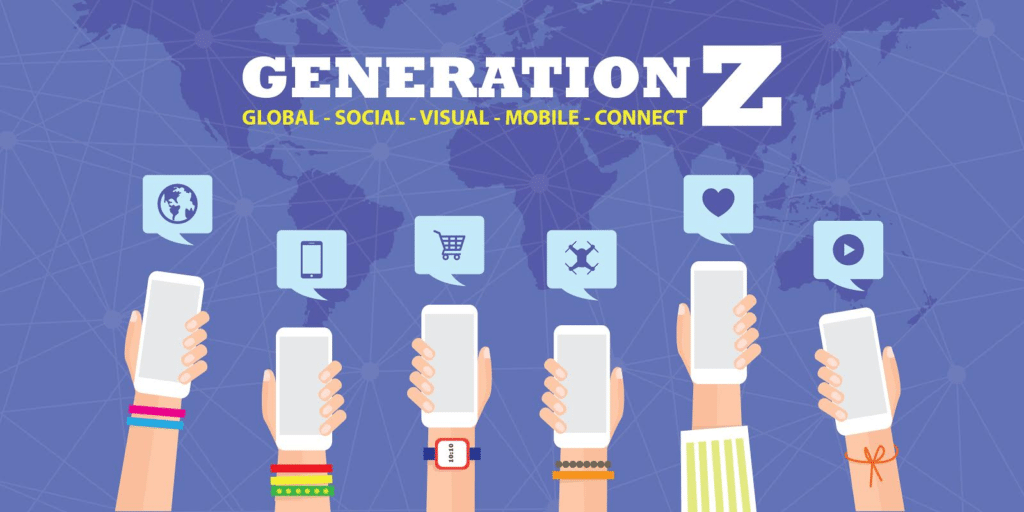
novblog2_1-1024x512-8002970Those born after 1996 make up this new generation of consumers. Most of them were born into a world where technology exists everywhere and in every area of their lives – therefore, technology is a huge driving force in their consumer decisions.

For this group, social media is an important part of their everyday lives. Diversity is also a huge representation of this generation, as they are a very inclusive generation. Let’s explore each characteristic and talk about how marketers and advertisers can best target members of Gen Z.

A Technological World

Gen Z does not know of a world without the Internet, streaming videos, smartphones, and social media. Because of this, they favor small amounts of streaming content when it comes to advertising, and they are mostly consumed on their phones, tablets, or computers through apps like YouTube, Instagram, or Facebook.

Connected through Social Media

Social media apps are the main source for how members of Gen Z consume media daily. For Gen Z, social media is how they stay connected with their friends/family, and influencers. What are influencers? Influencers are those found on apps like Instagram, YouTube, Twitter, and Music.ly. They are the ones who have thousands of followers on these platforms; they are becoming an increasingly important driver of consumption and consumer decision-making for Gen Z.

The Rise of Digital Media Influencers

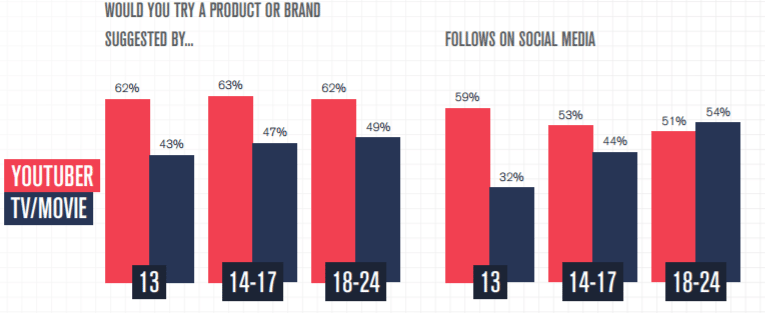
Unlike previous generations who idolized famous TV or movie stars, members of Gen Z fawn over the “digitally famous” – normal teens/young adults who received their fame through Vine, Snapchat, YouTube, Music.ly, or Twitter. Marketers should take notice of the increasing trend of using influencers to endorse their products to their audiences. These influencers have an unusual pull on their followers, Gen Z is influenced easily by them since they can identify and relate to them as opposed to a traditional celebrity. According to Defy Media’s 2016 survey (shown by the graph), Gen Z is more likely to follow on social media and make purchases recommended by their favorite YouTube influencers than traditional celebrities.

movblog2_2-5404964

Rebranding: Out with the Old, In with the New!

Thinking about rebranding your business, but aren’t sure quite where to start? There comes aimage1-3816666 point in the life cycle of every business where things begin to feel a little outdated and it’s time for a refresh. And when it comes to rebranding, there’s more to think about than simply revamping your logo — you need to consider evolving your company’s mission, analyzing the state of your client’s user experience, and adapting your marketing strategy to best fit your current goals. It’s a lot to think about, but don’t worry — that’s where we come in!

Trends & Advancements

Each and everyday changes occur, both in the economy and with technology, that can (and should!) have an impact on your business. It can be tough to keep up with the latest trends and industry advancements on top of handling all the day to day responsibilities of running your business.

If you’re worried that you’re falling behind when it comes to the strategies and tactics you use for promoting your business and attracting new customers, it might be time to bring in marketing experts (that’s us!) to help formulate the perfect tactics for your company and get you back on track.

Update Your Image

If you’re fortunate enough to own a successful business that has seen growth and expansion over the years, then there’s a good chance you may have outgrown your initial branding. When you first started your company, your line of services may not have been as extensive as they are currently. Or, your mission, vision, and priorities may have evolved over time. That’s why it’s essential that your branding and image be kept up-to-date! These elements are among the first things that potential clients see when they are looking into your services — make sure you’re telling the right story about your business!

Strategy is Everything!

Considering and exploring new areas of opportunity and adjusting strategy accordingly is an important phase when rebranding your company. No matter how awesome your branding is, or how impressive your office, website or team culture are — it won’t mean a thing if you’re using the wrong strategy. Are you reaching the right people on the right platforms? Is there is a new audience that you could potentially be targeting or a new product or service that you should be launching to keep up with the competition?

If you’re ready to take your business to the next level, give us a call at (352) 600-5050 to get started!